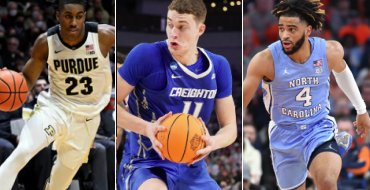
Here are all the current college basketball handicapping articles
from Maddux Sports.
College basketball is becoming one of the most popular sports to bet on due to the fact of the amount of games that are available to place bets on. For a five month span from November to March there is a plethora of games for which to bet every night. For the beginning bettor this can be very intimidating task. With so many options for what games to bet on, the beginning bettor might not know what to look for and be overwhelmed by the amount of choices to choose. However, I will outline what you can look for in order to make this task less dau ...
I love college basketball - can't get enough of it. That's part of why I find this time of year so interesting - teams are practicing and getting ready for the season, but there is so much else going on in sports that few people notice. The first few weeks of the year in the college basketball season are a huge opportunity for bettors who are ready for the. That means that now is the ideal time to be getting prepared for the season so you are ready to go as soon as games start. It really doesn't take too much to give yourself a big edge over t ...

Before we know it the college basketball season will be underway. Early in the season the sport doesn't get a whole lot of betting attention. The problem is that it just doesn't get much attention because there is so much else going on - the NFL and college football are getting really interesting, the NBA is under way, and the NHL is at full steam. I've talked to a lot of bettors who don't start betting college basketball seriously until the new year. Others, though, can't wait for the games to start and think that November and December are th ...
People who spend a lot of time handicapping college basketball are obviously very sophisticated in their approach. People who only do it casually or are just starting out typically look at a few predictable factors - the records of the teams, the conferences they play in, the performance of the high profile players, and so on. Those casual bettors will likely find that while those factors are important they are not significant enough to consistently pick out winners. New college basketball handicappers and casual bettors could easily and drama ...

Not long after the nets are cut down and the NCAA Championship is over for the year you can bet on who you think is going to win the next edition. It's always intriguing to see what the futures have to say about the teams and their chances for the next season. It's typically not much of a betting opportunity, though - tying up your money for that long would require a lot more value that you can usually get. Every so often, though, there is a future price that is s attractive that it makes sense to bet on the team as soon as you can. Here are f ...
In College Basketball the best time to place bets during the season is the first week in January when conference play begins. The reason being is that usually non-conference games for teams in the larger conference are basically warm-up games for their upcoming season. There are some exceptions to this rule, but more often than not, a school will schedule cupcake games which in turn will raise spreads for these games very hard to cover. That is why the advent of conference play will really ensure a level playing feel and will allow you to have ...

Guys like Carmelo Anthony, Kevin Durant, and Derick Rose have done bettors a disservice. Those guys have shown what is possible when a ridiculously talented young player is given a leadership role on a team. They were very successful in their one year in college - especially Anthony - and then went on to shine in the pro game. Because of them and others the expectations are very high every year when the hyped, heavily recruited young freshmen - the ones who are sure to be one-and-done - hit the field. The problem for bettors is that the expect ...
The closer we get to Tournament time, the more value there is for college basketball bettors in being able to spot good teams that are flying under the radar. When March rolls around there are always teams that the betting public and the mainstream media don't see coming - good teams that perform very well despite little attention. These teams - whether mid-majors or low profile teams from major conferences - are always painted as Cinderella teams that have come from nowhere to perform miracles. The truth is, though, that these teams have been ...

When you are thinking about handicapping the college basketball season what you are really doing is handicapping seven different, distinct mini-seasons. Each one is unique because the motivations and levels of preparedness of teams are different in each case, and that changes how successful bettors approach each segment of the season. The changes are often subtle, but being aware of them can give you an edge that will add to your bottom line. Here's a look at the seven segments, why they are unique, and how to compensate for them. ...
There is still a whole lot of college basketball left to play this year. It would be dangerous to assume that we really know how good or bad teams really are - or are going to be by the end of the year. We can't help but be surprised by some of what we have seen so far, though. Teams that get off to a surprisingly fast start can be tough for handicappers to deal with. When a team jumps out of the gate with surprising power then we have to determine if they are for real, or if what we have seen is just an illusion. Reading a team wrong can be c ...
By the time we get halfway through the college basketball season we are able to have a pretty strong sense of what teams have to offer bettors. More significantly, we've already seen teams go through changes. Some teams start out very strong and then falter as the season progresses and conference play starts. Other teams struggle early on but really find their stride with some experience. In a lot of cases these changes in the way a team are playing are obvious and well covered by the media. Quite often, though, the changes don't get noticed. ...
A growing trend in sports betting is the betting on the second half of a college basketball game. However, this bet is not for everyone as it is a bet that has to be made at the spur of the moment. You have until the end of the first half until the beginning of the second half to make your bet and for a lot of bettors this is just not enough time to be able to make a decision. However, there are many advantages to betting on the second half spread and I will cover the process by which you can e ...
Tempo - a simple term and a simple concept that provide quick and valuable insight into what happened in past basketball games, and what is likely to happen in future ones. It's impossible to watch every game played - or even a significant percentage of them. By using tempo, and by extension tempo-free stats, you can use the boxscores to get a good sense of what actually happened in a game - not the deceptive story that the final score and traditional stats can tell. ...
Everybody loves an upset - the kind when a scary Goliath is knocked down to size by the most unlikely of Davids. It's exciting to watch, and it's especially exciting because we often don't know they are going to happen until they have happened. These upsets are particularly common in college basketball because the top teams play several games a year against teams that should be badly outmatched, so there are plenty of opportunities for a shocker. Spotting those massive upsets can be very tough for bettors to do. What can be easier, though, is ...
With the arrival of the college basketball season handicappers who are focusing on the sport are left with an interesting debate - should they be a generalist or a specialist. Generalists look for the most attractive games played on a given day, while specialists focus their attention on one conference and get to know the intricacies of each team in that conference and how they relate to each other. Specialists rely on their specific and detailed knowledge of teams and matchups to find their edge, while generalists will have to replace that kn ...
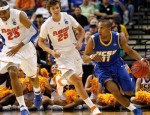
Anyone who bets on college basketball regularly knows that it is not at all uncommon to see big spreads - double digit monsters. These lines are always tough to handicap because the favorite can win the game easily and still not come close to covering the spread. You really have to handicap these bug lines on a game by game basis to have the best shot of making a profit over the long term, but there are some questions you can ask that are definitely applicable in most situations - at least as a starting point. ...
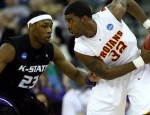
We don't see a lot of midseason coaching changes in college basketball. Sometimes, though, a situation is bad enough that teams just have to make a change - just like Wyoming did in early February of 2011. When those changes happen they can create a really powerful opportunity for bettors. The public is automatically going to assume that a team that makes a change like this is in trouble, and they are going to be negative about their chances. If the team can perform better than expected right after the coaching change, then, you can find poten ...
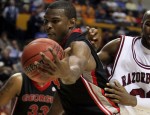
Because there are so many teams playing in so many different leagues college basketball can be really intimidating for a lot of bettors. To combat that problem a lot of public bettors rely heavily on public and media perception of teams - basing their opinions on what they read and hear from the media. Because of that, one of the real gems for handicappers to find is a team that the media likes that is clearly overrated. If the media likes them then the public will like them, so if they aren't as good as they appear to be then there will likel ...
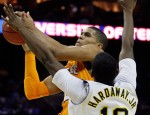
When it comes to betting on college basketball, smart bettors know that coaches really matter. College players are young and inexperienced, so the guidance of a coach can make the difference between a bad team and a great one. Coaching is obviously important in every sport, but the impact of a coach on a day to day basis is more significant in college than anywhere else. ...

One of the concepts we hear a lot about when handicapping college basketball is the importance of returning starters. The basic theory is simple - the more returning starters a team has, the more comfortable they are going to be with the demands of their coach and the speed of college basketball, and the more effective they will be. It's a widely held theory, and a reasonably sound on e- at least in general terms. Like most easy to state theories, though, it's not quite as straight forward as it might seem. Here are six things to keep in mind ...
For handicappers it can be a real challenge to assess situations when a key player is returning to action after a long absence. Whether it's in the postseason or the regular season handicappers need to be sure they can quickly get a sense of what is likely to happen so that they know how it impacts the team, their games, and ultimately the value. Here are seven questions to help assess what impact a long-absent returning player can have. ...
Read the full article on
Injured Stars Returning 
There are a variety of factors that come into play when betting on NCAA college basketball. Besides your basic statistics, home-court advantage, and scheduling, there is another aspect that can influence the outcome of a game significantly - the revenge factor. When you look at the latest odds to figure out which lines carry value and which ones you want to stay away from, make sure to take previous meetings between the two teams into account. The revenge factor doesn't influence every second meeting, and sometime players don't let previous pe ...
Some made for TV events work better than others. One of the best, form both a spectator and a betting perspective, is ESPN's BracketBuster. The annual event which comes around late in February every year creates some real drama, and some real value. Some background if you aren't familiar with the event: Before the season starts several participating mid-major conferences - 15 conferences and an independent - designate teams to be eligible for the event. Last year there were a total of 114 teams that were made eligible. Early in February ESPN i ...
Read the full article on
Bracket Buster Picks 
There are more neutral site games played in college basketball than in any other sport. there are actually more played in college basketball than all other sports combined. That means that neutral site games have to be on the mind of college basketball handicappers to a much higher degree than they do for handicappers of other sports. You can out-think yourself if you worry too much about these games, but if you ignore the impact of the setting entirely then you are doing yourself a disservice. Here are four questions to ask yourself when thin ...
As we get closer and closer to the start of the college basketball season every handicapper who loves the sport is looking for ways to get an edge out of the gate. One of the best ways to do that is to attempt to spot teams that could be significantly better than they were last year. Breakout teams often provide real value for a while because it takes a while for the media and the betting public to catch on to how well they have improved. Here are five ways to spot teams that could be ready to improve dramatically. ...